"We Mailed 50,000 Postcards. Good Luck." — Why That's Not Good Enough Anymore
February 2026 – Here's how most direct mail campaigns end: someone at the print company hits "go," 50,000 postcards land in mailboxes over a few days, and then… silence. Maybe you get a PDF report a month later with delivery confirmation. Maybe you don't.
Either way, the conversation is usually the same: "We mailed them. Hopefully it works."
That's not a strategy. That's a coin flip with a postage bill.
The real problem isn't the mail. It's the blind spot after it lands.
Direct mail actually works. It cuts through the noise in ways that digital alone can't. People hold it, read it, stick it on the fridge. The response rates are measurably higher than email for most industries.
But here's where most mail companies drop the ball: the moment the postcards leave the facility, they wash their hands. You're left wondering whether your $5,000 or $50,000 investment actually moved the needle, and the only "proof" you get is a vague sense that the phone might be ringing a little more.
That's the blind spot. And it's the reason smart marketers have been skeptical of direct mail — not because it doesn't work, but because nobody could show them that it did.
What if you could actually see what happened?
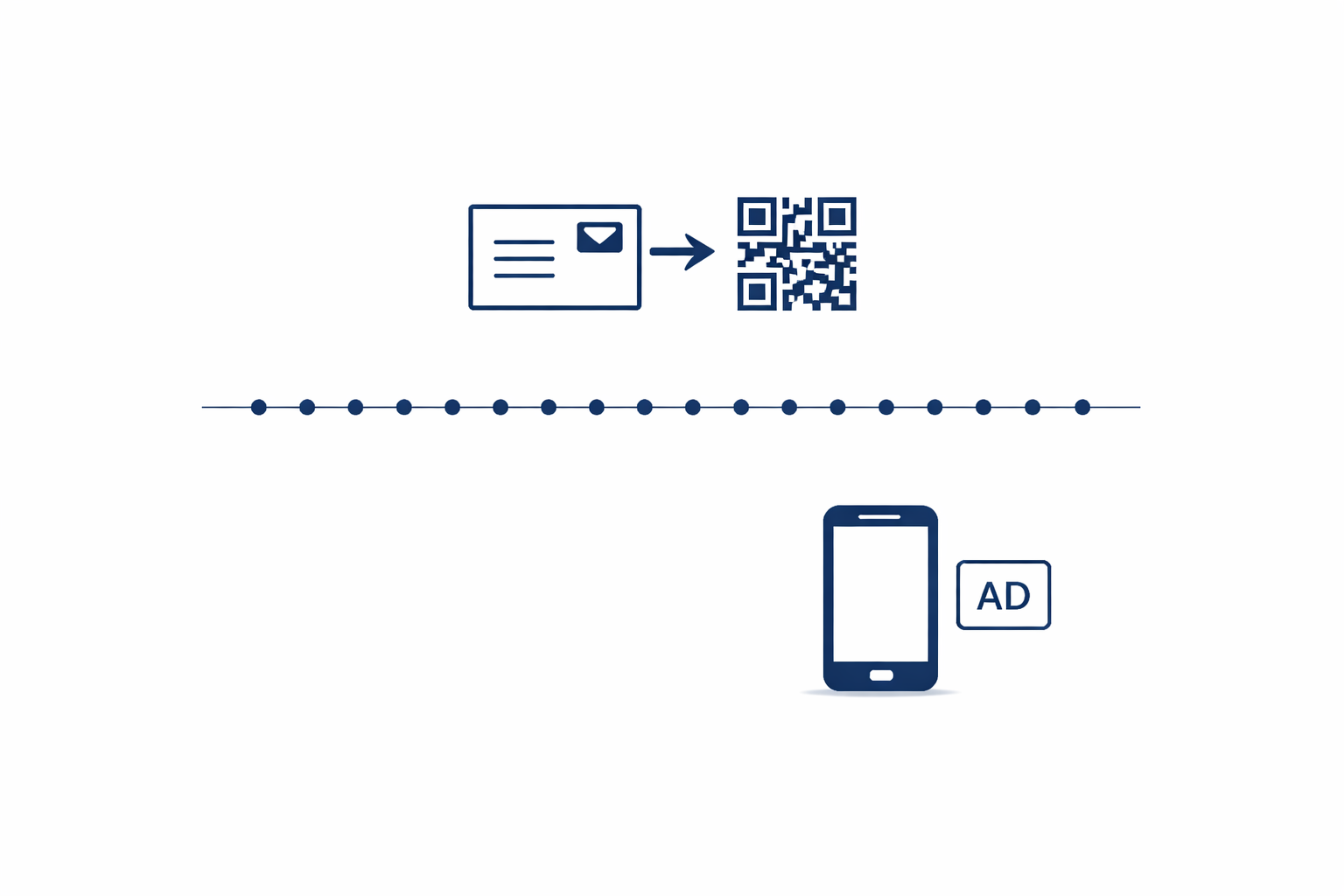
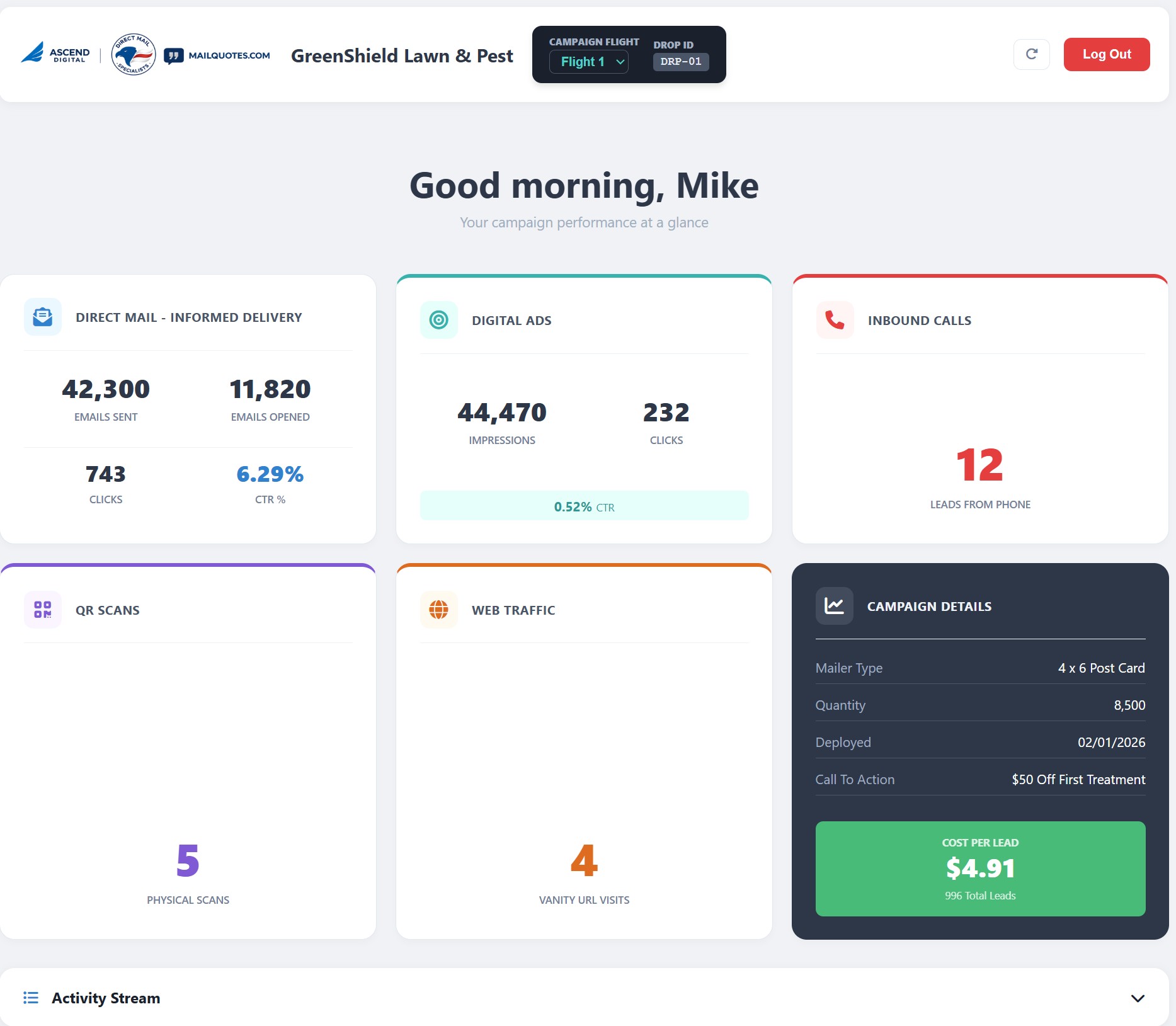
That's exactly why we built the Ascend Signal Hub. It's a live campaign attribution dashboard that tracks five independent signals from every campaign — not estimates, not projections, not "we think it's working." Real data. Updated daily. Accessible from your phone or laptop anytime.
Here's what you see when you log in:
Signal 1: USPS Informed Delivery
Before your postcard even hits the physical mailbox, USPS sends a digital preview to subscribers. We track how many of those emails were sent, how many were opened, and how many people clicked through. This is the earliest indicator that your campaign is generating interest — sometimes before the mail even arrives.
Signal 2: Digital Ad Impressions & Clicks
We run geofenced digital ads to the same audience your mailer targets. You see exactly how many impressions were served, how many people clicked, and the click-through rate. This isn't a separate campaign — it's reinforcement that keeps your offer in front of people while the mail is still warm.
Signal 3: Inbound Phone Calls
Every campaign gets a dedicated tracking number printed on the mailer. Every call to that number is logged automatically — no manual tallying, no asking "how did you hear about us?" You see the count in real time.
Signal 4: QR Code Scans
The QR code on your mailer doesn't just link to your website. It routes through our tracking system first, so every scan is recorded and attributed to the specific campaign. You know exactly how many people picked up the postcard and took action.
Signal 5: Vanity URL Visits
Not everyone scans a QR code. Some people type in the web address. Your custom vanity URL (like TrySmithDental.com) is tracked the same way — every visit is logged and attributed to the campaign.
All five signals. One dashboard. One number that matters.
At the bottom of every dashboard is the number that makes or breaks a campaign: Cost Per Lead. We take your total campaign investment, divide it by the total leads generated across all five signals, and give you a number you can actually compare against your other marketing channels.
No guessing. No "we think it worked." No waiting 30 days for a PDF that tells you what you already suspected.
Transparency goes both ways
Here's the part most mail companies would never agree to: the Signal Hub shows you everything — including when a campaign isn't performing. If the QR scans are flat, you'll see it. If the calls aren't coming in, you'll see it. If the digital ads are getting impressions but no clicks, you'll see that too.
We're fine with that. Because when you can see what's not working, you can fix it. Swap the offer. Adjust the audience. Tighten the landing page. That's how campaigns get better — not by hoping, but by knowing.
And when a campaign is working? The dashboard makes the case for scaling better than any sales pitch ever could. The numbers speak for themselves.
The old way vs. the new way
The old way: Mail company prints and ships. You wait. You hope. Maybe you get a delivery report. You never really know what worked.
The new way: Your mail drops. Within days, five independent tracking signals start feeding your live dashboard. You see who's opening, clicking, calling, scanning, and visiting. You know your cost per lead before the ink on the invoice is dry. And you have everything you need to decide: scale it, tweak it, or kill it — based on data, not gut feel.
Where to go from here
If you're tired of writing checks and crossing your fingers, we'd love to show you what the Signal Hub looks like with real campaign data in it. It takes about five minutes.
You can reach out to the team to request a live walkthrough, or start with an Get a Custom Quote to see what a tracked, attributed campaign would look like for your business.
Direct mail works. But "good luck" isn't a reporting strategy. It's time to see what's actually happening.
Direct Mail Specialists is the direct mail marketing branch of Mailquotes.com, LLC. We provide direct mail and integrated direct mail + digital campaigns throughout the U.S., Canada & Puerto Rico. Call us at 1-800-704-0597.